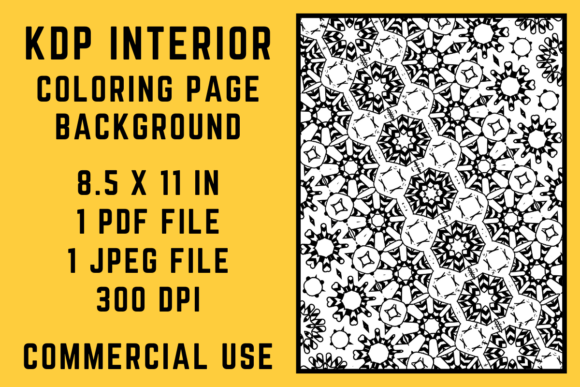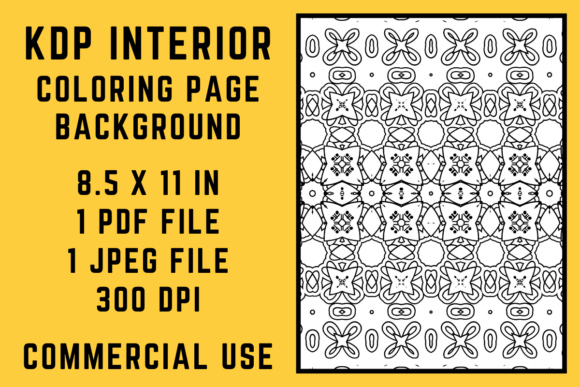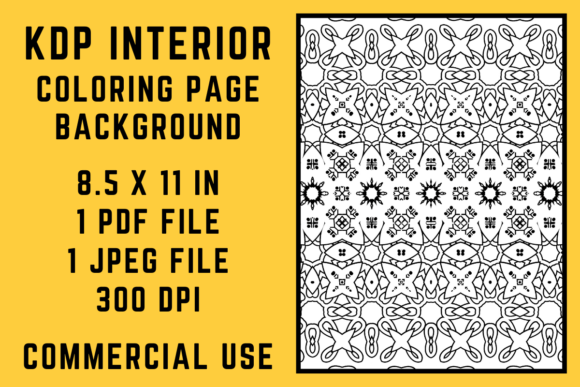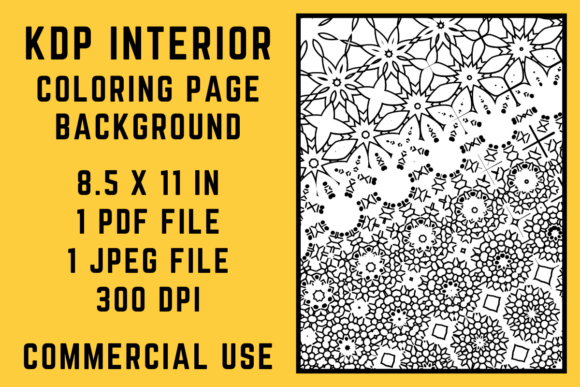
KDP Interior Coloring Page Background 28: A Versatile Asset for Creative Projects
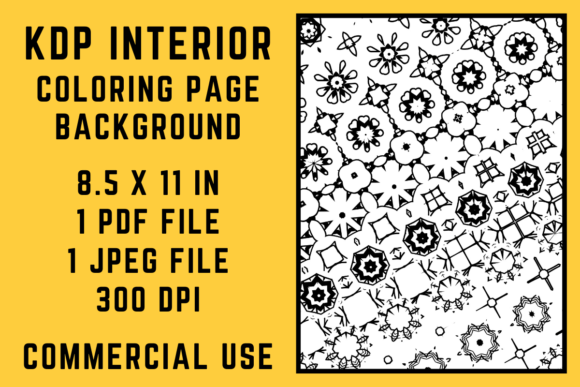
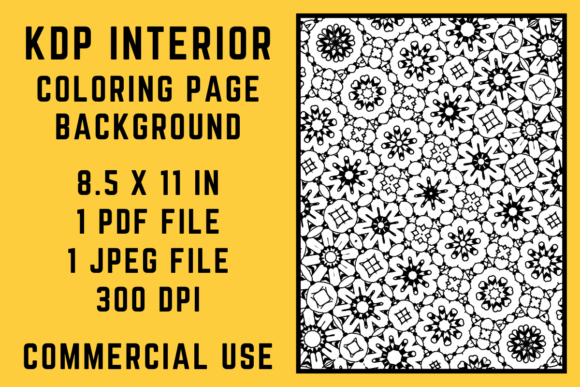
For creators working in the digital marketplace, particularly on platforms like Amazon's Kindle Direct Publishing (KDP), finding high-quality, versatile assets is a constant pursuit. KDP Interior Coloring Page Background 28 represents a specific type of resource designed to serve as a foundational element in a wide array of projects. Unlike a standard coloring page featuring a defined object or scene, this background offers a patterned, often thematic, design that fills an entire page. Its distinction lies in its intentional ambiguity; it provides structure and aesthetic interest without dictating a specific subject, allowing the end user—whether a coloring book enthusiast, a scrapbooker, or a graphic designer—to impose their own creative vision upon it.
Understanding what this asset is requires looking at its core components. It is typically delivered as a set of files: a PDF and a high-resolution JPG, both formatted at the standard 8.5 x 11 inches with a quality of 300 DPI. This specification is crucial. The 300 DPI ensures that prints are sharp and professional, whether the image is used for physical coloring books, craft projects, or professional digital work. The inclusion of both file types speaks to its versatility; the PDF is often ideal for direct printing or incorporation into multi-page documents, while the JPG offers flexibility for digital editing in software like Photoshop, Procreate, or Canva.
Comparing Background Assets: Standalone Pages vs. Integrated Collections
When evaluating KDP Interior Coloring Page Background 28, it's helpful to consider the broader category of KDP coloring resources. Many creators purchase or design entire coloring book interiors, which are cohesive collections of themed pages (e.g., a whole book of floral designs or fantasy creatures). Background 28, as a standalone page, sits in a different niche. Its primary comparison point is against other individual background assets or against the practice of creating such backgrounds from scratch.
For a creator aiming to publish a full coloring book, purchasing a single background might seem insufficient. However, its utility shines in specific scenarios. It can serve as a "test page" to gauge printing quality and customer response before committing to a full themed collection. It can also be used as a supplemental page within a larger book to add variety—a patterned background page placed between more detailed illustration pages can offer a relaxing, less complex coloring experience. The tradeoff here is between comprehensiveness and flexibility. A full book interior provides a ready-to-publish product but locks you into a single theme and style. A standalone background like KDP Interior Coloring Page Background 28 offers maximum flexibility for experimentation, customization, and use across disparate projects, but requires more work to build a complete book around it.
Strengths and Core Use Cases
The advertised use cases—from scrapbooking and invitations to web graphics and wrapping paper—point to its fundamental strength: adaptability. The high-resolution file is a blank canvas with a pre-designed texture or pattern. For example, if the background features a delicate, non-directional lace pattern, it could be colored and used as a vintage-style wedding invitation backdrop. The same file, with different color choices, could be cropped and applied as a textured element on a website header. This multifunctionality is a key decision factor for buyers who operate across multiple creative domains.
Another significant strength is the commercial use license typically included. This permits the asset to be used in products for sale, such as in a KDP coloring book, on craft items for an Etsy store, or within logo designs for a small business. Compared to sourcing free patterns from the web, which often have ambiguous or restrictive licenses, this clear commercial grant provides legal security and peace of mind, a vital consideration for serious creators.
Limitations and When to Seek Alternatives
While versatile, KDP Interior Coloring Page Background 28 is not a universal solution. Its limitations often relate to specificity and scale. If your project demands a very particular theme—say, a coloring book exclusively about marine biology with accurate illustrations of sea creatures—this generic background page will not fit. You would need to look for a specialized collection or hire an illustrator.
Scale is another consideration. For someone planning to create a 50-page coloring book, purchasing 50 individual background pages would be financially and logistically inefficient compared to buying a bundled set or a complete interior. The standalone page is best suited for smaller projects, hybrid projects, or as a component within a larger, mixed-content product.
Furthermore, the design quality and complexity of the background itself are paramount. When comparing options, one must assess the artistic merit of the pattern. Some backgrounds may be overly simple or use common motifs readily available elsewhere, while others might offer unique, intricate designs that truly stand out. The "28" in the title suggests it is part of a series, so evaluating other backgrounds in the same series for consistency or variety could be a wise step.
Tradeoffs in Format and Application
A practical comparison arises in the choice between using this background for physical versus digital end products. For physical applications like coloring books or printed cards, the 300 DPI JPG and print-ready PDF are ideal. However, for purely digital applications like planner stickers or web graphics, the large file size might need to be optimized or converted to other formats (like PNG for transparency) using additional software. This requires a bit more technical skill. An alternative for digital-only creators might be to seek assets already packaged in SVG or layered PNG formats, which offer more immediate digital flexibility, though they may not be optimized for print.
The "background" nature also involves a tradeoff in user engagement. For a coloring book consumer, a page filled with a uniform pattern might be less immediately appealing than a page with a clear, recognizable illustration like a dragon or a portrait. It targets a different segment of the coloring audience: those seeking a meditative, abstract, or texture-focused experience rather than a representational one. This is a crucial market fit consideration for KDP publishers deciding on their book's content mix.
Decision Factors for the Independent Creator
Determining if KDP Interior Coloring Page Background 28 is the right choice hinges on several factors. First, assess the scope of your current project. Is it a one-off invitation, a single blog graphic, or the start of a larger coloring book? For one-off projects, it can be a cost-effective and quick solution. For larger books, it might serve as a starting point or a filler.
Second, evaluate your own design capabilities. If you are proficient in graphic design software, you might modify this background extensively, changing colors, isolating elements, or combining it with other assets. If you are less skilled, a ready-to-use, beautiful background saves significant time and guarantees a professional base quality. In this case, comparing the aesthetic style of this background to your project's needs is essential.
Finally, consider your need for speed versus uniqueness. Using a purchased background like this accelerates production. The tradeoff is that other creators might also use the same asset. If your brand requires utterly unique content, commissioning custom art or creating your own patterns from scratch is the alternative path, involving higher cost, time, and skill investment.
Realistic Applications and Final Considerations
Imagine a realistic example: a small business owner creating a line of birthday party printables. They need wrapping paper designs, cupcake topper tags, and a coloring activity sheet for the kids' table. KDP Interior Coloring Page Background 28, if it has a celebratory pattern like confetti or balloons, could be the single asset used for all three. They could color it vibrantly for the wrapping paper, crop and minimalize it for the tags, and leave it uncolored for the activity sheet. This maximizes the return on a single purchase.
Another example is a KDP author creating a "Stress-Relief Patterns" coloring book. They might mix 20 intricate mandala pages (from a different source) with 10 simpler, repetitive pattern pages like KDP Interior Coloring Page Background 28 to provide variation in difficulty and style. This creates a more dynamic book that appeals to a wider range of coloring skill levels.
In conclusion, KDP Interior Coloring Page Background 28 is a specialized tool in a broad creative toolkit. Its value is not as a standalone product but as a high-quality, adaptable component. It excels in situations where versatility, commercial safety, and print readiness are prioritized. It may be less suitable for projects requiring extreme thematic specificity or for creators committed to producing entirely original art. By understanding its distinct role, comparing it to the broader ecosystem of digital assets, and weighing its strengths against its inherent tradeoffs, creators can make an informed decision about integrating it into their workflow, ensuring it serves not as a limiting template, but as a springboard for their own imagination.