Building a Professional Network: The Role of Address Books in Digital Publishing
In the interconnected world of content creation, organization is not merely a clerical task; it is a foundational element of professional practice. For authors, designers, and entrepreneurs publishing through platforms like Kindle Direct Publishing (KDP), managing contacts—from beta readers and editors to illustrators and marketing collaborators—becomes a critical component of project success. The concept of an Address Book for KDP Book Interior transcends the simple notion of a contact list. It represents a structured, aesthetically integrated system designed to enhance the creator's workflow and the final product's professionalism.
From Functional List to Design Asset
Traditional address books are often utilitarian, hidden in the back matter of a volume. However, in modern self-publishing, every page of a book interior contributes to the reader's experience and reflects the author's brand. An address book section, when thoughtfully designed, can serve dual purposes. Primarily, it provides the author with a meticulously organized space within their own working manuscript to track essential contacts. Secondarily, if intended for public-facing editions, such as collaborative projects or business directories, it becomes a clean, readable feature for end-readers.
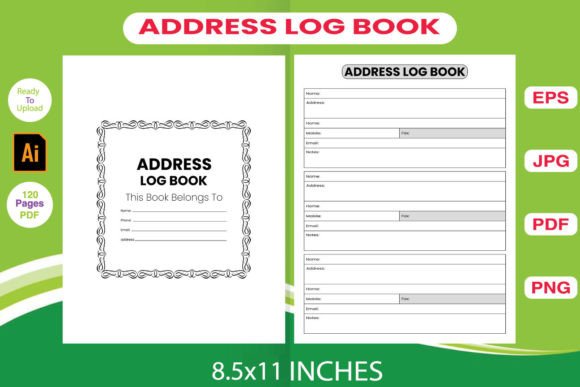
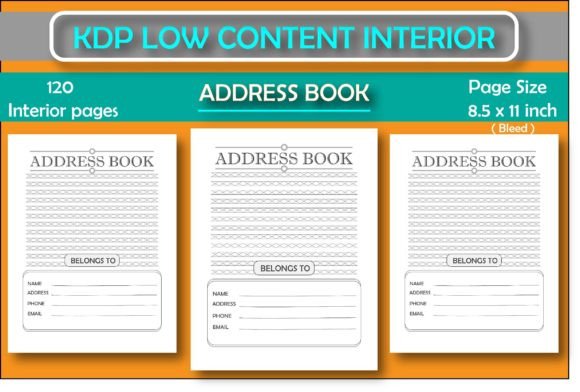
The specific design files mentioned—Address Book templates for KDP interiors—are crafted to bridge this gap between utility and presentation. These resources are not simple text documents. They are professional-grade design files, offering creators significant advantages over starting from a blank page.
Core Characteristics of Professional Address Book Templates
Understanding the specifications of these design assets clarifies their value in a practical workflow. The features include high-resolution 300 DPI color mode, ensuring print-ready clarity for any interior page that might incorporate graphical elements alongside the contact list. The provision of multiple file formats—AI, SVG, EPS, and PDF—catersto different software ecosystems and user skill levels.
A graphic designer working in Adobe Illustrator can leverage the native AI file for deep, vector-based customization. A blogger or author using simpler tools might utilize the SVG or PDF for easier placement. The inclusion of well-documented, recommended free web fonts underscores a commitment to typographic consistency, which is vital for brand cohesion. Perhaps most importantly, the fully editable text and colors mean the template is a starting point, not a constraint. A user can adapt it to match the exact aesthetic of their book's interior, blog theme, or brand palette without compromising the underlying clean structure.
Practical Applications Across Creative Fields
The use cases for such a specialized resource are broader than initially apparent. They extend beyond the solitary author compiling an editor's email.
For the KDP Author, it integrates directly into the manuscript file. While writing and formatting the interior, they can maintain a growing, well-designed list of industry contacts, reviewers, and potential interview subjects right within the same document. This eliminates juggling separate, disparate files and ensures the contact information is formatted to match the book's style from day one.
Photographers and Graphic Designers often create portfolios, client guides, or instructional materials for KDP. An address book section in such a volume can list clients, stock photo agencies, equipment suppliers, or licensing contacts. Presenting this information in a beautifully designed template elevates the professionalism of the entire publication.
For Business Owners and Bloggers creating promotional materials or lead magnets, these designs offer a way to freshen up content. A downloadable "Industry Partners Directory" or a "Resource Contact List" within an ebook can be a valuable offering to audiences. Using a pre-designed, editable template saves hours of design work, allowing the creator to focus on content curation and relationship building.
Integration into a Modern Creative Workflow
Consider a typical project flow for an educator publishing a textbook via KDP. The process involves research, writing, peer review, fact-checking, illustration commissioning, and legal consultations. Contacts for each phase are numerous and vital. Having a dedicated, editable address book template already placed in the book's interior document acts as a living appendix. As the project evolves, the educator adds contacts directly into the formatted layout. Upon completion, this section can be kept for their private reference or, if appropriate, included as a "Contributors and Resources" page in the published book, formatted consistently with the rest of the interior.
This workflow efficiency highlights a key advantage: contextual organization. Information stored in a separate spreadsheet or physical notebook is disconnected from the project file. Information embedded within the project file, using a design that matches the project's aesthetics, remains contextually relevant and reduces the risk of being overlooked or lost.
Design Considerations for Readability and Brand Alignment
Implementing an address book is not just about filling in blanks. Thought must be given to how it serves its purpose. A cluttered, poorly spaced contact list is difficult to use and unpleasant to read. The mentioned template designs inherently address spacing, hierarchy, and alignment—the core principles of readable layout.
Users should also consider alignment with their broader brand or book design. The editable color mode allows matching accent colors to a book cover or website logo. The use of recommended free fonts ensures the typography does not clash with the chosen font for chapter headings or body text. This creates a seamless visual experience, reinforcing a professional and cohesive brand identity across all materials, from the KDP book interior to promotional blog posts.
Another consideration is scalability. A good template accommodates growth. Whether listing ten contacts or one hundred, the structure should hold up, preventing the need to redesign the section midway through a project. The vector-based file formats (AI, EPS, SVG) are inherently scalable without quality loss, supporting this need perfectly.
Beyond KDP: Cross-Platform Utility
While designed for KDP book interiors, the utility of these editable address book designs naturally extends to other mediums. The same AI or SVG file used to create a contact page in a paperback interior can be effortlessly adapted.
A graphic designer might extract a section of the design to create a clean, stylized contact card for a website's "Team" page. A hobbyist running a community blog could use the PDF version to generate a printable "Club Officers" list for a newsletter. The high-resolution 300 DPI guarantee means the graphic elements remain sharp whether printed in a book, displayed on a screen, or used in social media posts to promote a business's network.
This cross-platform capability makes the resource a versatile tool in a creator's asset library. It moves from being a single-use template to a repeatable design component, saving time and ensuring brand consistency across digital and print outputs.
Observations on Modern Professional Networking
The emphasis on a well-designed address book within a publication reflects a broader trend in professional and creative work: the merging of substance and presentation. In the digital age, a network is not just a private asset; it is often a curated element of one's professional portfolio. Showing that you collaborate with respected editors, talented illustrators, or esteemed institutions adds credibility. Presenting that network in a clear, attractive format within your own published works enhances that credibility further.
It acknowledges that the tools we use to organize ourselves should not be separate from the tools we use to present ourselves. An Address Book for KDP Book Interior, when implemented as a designed, editable component, embodies this principle. It turns a routine administrative task into an integrated part of the creative and professional narrative, ultimately supporting the creator's goal to produce coherent, high-quality, and well-managed content for their audience, clients, or peers.