The Power of Letter Matching: A Foundational Skill for Early Literacy
In the journey of early childhood education, few activities are as quietly powerful as the simple task of matching letters. The concept of Match the Letters for Kids serves as a critical bridge between visual recognition and alphabetic understanding. It is more than a mere worksheet exercise; it is a cognitive process that lays the groundwork for reading, writing, and communication. For educators, parents, and creators of learning materials, understanding the depth and application of this task is essential for fostering effective learning environments.
Beyond the Worksheet: The Cognitive Mechanics of Letter Matching
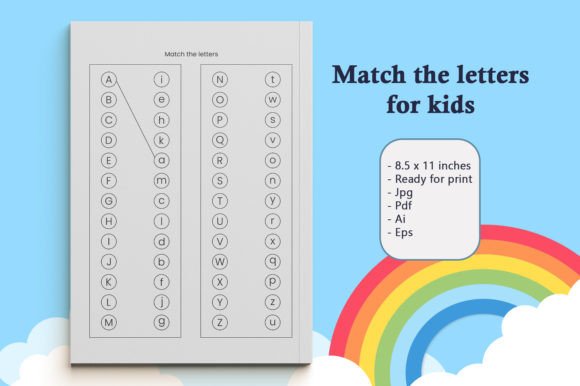
When a child engages in an activity like match the uppercase letter to the lowercase letter by drawing a line to it, they are not simply drawing lines. They are performing a complex neurological operation. This process involves visual discrimination, where the brain learns to identify subtle differences in shape and form. The uppercase 'A' and the lowercase 'a', for instance, share a conceptual identity but present distinct visual profiles. Matching them reinforces the idea that these two symbols represent the same sound and concept, a fundamental principle of alphabetic systems.
This activity strengthens memory association and symbolic thinking. It moves the letter from being an abstract shape to a meaningful unit of language. For toddlers and young kids, this hands-on, visual-motor integration—the physical act of drawing a line—solidifies learning more deeply than passive observation. It connects the kinesthetic action with the visual and cognitive tasks, creating a multisensory learning experience that is highly effective for early development.
Real-World Relevance in Educational and Home Settings
The practical application of letter matching exercises is vast. In preschool classrooms, it is often a centerpiece activity for literacy centers. Teachers use it to assess individual student understanding of the alphabet without the pressure of verbal recitation. At home, parents utilize these activities as structured, yet engaging, learning tools that can bridge the gap between play and formal education. The activity’s simplicity in presentation—often a clean page with clear letters—makes it accessible for children at various stages of development.
Moreover, for children with diverse learning styles, the match the letters task can be adapted. Some children may benefit from matching magnetic letters on a board before progressing to paper-based tasks. Others might use digital apps that incorporate the same principle with interactive feedback. The core objective remains unchanged: building reliable associations between uppercase and lowercase forms.
Characteristics of High-Quality Letter Matching Resources
For creators and publishers aiming to produce materials like the described Match the letters for Kids and Toddlers product, certain characteristics define quality and usefulness. The design must prioritize clarity and minimize distraction. Letters should be presented in a clear, child-friendly font, with ample space for the child to draw their connecting line without clutter.
The structural integrity of the activity is key. A logical progression, perhaps starting with letters that are visually similar (like 'C' and 'c') and moving to those more distinct (like 'R' and 'r'), can scaffold learning. The inclusion of a variety of letter pairs, rather than a repetitive sequence, maintains engagement and challenges the child appropriately. High-quality interior design, tested for platforms like Amazon KDP, ensures that the physical or digital product delivers a seamless experience for the end-user—the child and the supervising adult.
Considerations for Design and Distribution
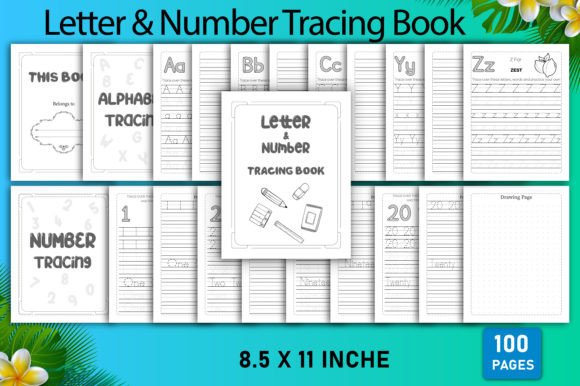
When offering such resources, the technical specifications matter greatly to professionals and hobbyists creating their own materials. The mention of files provided in Jpg, Pdf, Ai, Eps formats caters to a wide audience. The PDF is ready for printing or digital distribution, the JPG for quick previews or online use, and the Ai and EPS files allow graphic designers and educators to customize and adapt the original work for specific needs. Dimensions of 8.5 x 11 inches represent the standard US letter paper size, ensuring easy printing and compatibility.
A tested, ready to upload interior optimized for Kindle Direct Publishing is a significant advantage for business owners and creators entering the educational marketplace. It removes technical barriers and ensures the product meets platform standards. The provision of files in a single ZIP archive simplifies logistics for the customer. These practical considerations underscore the move from a simple educational idea to a viable, user-friendly product.
The Advantages: Why This Simple Activity Endures
The enduring popularity of letter matching exercises stems from a confluence of advantages. First, it offers immediate, tangible feedback. A child can see immediately if their line connects correct pairs, providing a sense of accomplishment or a clear point for correction. This supports independent learning.
Second, it is inherently scalable. For a toddler, matching may involve only a few, large-print letters. For a kindergartener, it might involve the full alphabet or even matching letters to beginning sounds of pictured objects. This scalability makes it a long-term tool in a child’s literacy development. Finally, it is a formative assessment tool. Observing how a child approaches the task—their confidence, their errors, their method—provides invaluable insights into their alphabetic knowledge without formal testing.
Integrating Letter Matching into Broader Workflows
For educators and curriculum developers, letter matching is rarely a standalone event. It is a node in a broader literacy workflow. It might follow a song or story highlighting specific letters and precede a writing activity using those same letters. In a homeschool setting, it could be part of a morning routine of "literacy games." Creators of educational content often bundle letter matching sheets with other phonemic awareness activities to create comprehensive learning packets.
The activity also fits into trends towards customizable learning. With access to the original vector files (like Ai or EPS), an educator in a specialized setting could modify the letters to use a specific font suited for children with dyslexia or add visual cues for children needing extra support. This flexibility highlights how a traditional activity can evolve with modern educational tools and sensitivities.
Audience Insights: From Researchers to Busy Parents
The appeal of Match the Letters for Kids activities spans the intended broad audience. Researchers in early literacy might study the efficacy of such matching tasks compared to other alphabet learning methods, interested in the cognitive load and retention rates. Professional educators analyze and select the best resources for their classroom, valuing the tested, high-quality interior and KDP-ready format for reliability.
Consumers and busy parents look for effective, no-fuss activities that provide clear educational value without requiring extensive preparation. The promise of a ready-to-use product, delivered in a convenient ZIP file with multiple formats, directly meets this need. Hobbyists, such as those crafting personalized learning materials for their grandchildren, benefit from the editable design files to create bespoke versions. Business owners in the educational sector see a product with clear application, straightforward distribution through platforms like Amazon, and an enduring market due to the timeless nature of the skill being taught.
In observing real-world use, one notes that the most successful implementations often pair the structured activity with playful encouragement. The worksheet itself is a tool, but the learning is mediated by the interaction—a parent saying, "Let's find the partner for this big B!" or a teacher celebrating a correctly matched line. The product is the catalyst, but the human engagement completes the educational circuit.
Final Observations on Implementation and Impact
Choosing or creating a letter matching resource involves considering the child's developmental stage, the learning environment, and the desired outcome. A minimalist design without bleed, as specified, ensures that the child’s focus remains solely on the letters and their task, not on distracting borders or backgrounds. The high-quality interior speaks to a commitment to clarity that respects the child’s visual perception.
The impact of mastering letter matching is profound yet subtle. It is a step that transforms letters from isolated symbols into a relational system. When a child reliably knows that the uppercase 'M' and the lowercase 'm' are the same, they have built a piece of the cognitive framework necessary for decoding words. For anyone involved in guiding early learners—whether as a professional, a creator, or a parent—understanding and leveraging the simple act of matching letters is an investment in a child's foundational literacy, a skill with real-world relevance that echoes through their entire educational journey.