Understanding Anxiety Journal Log Book KDP Interior: A Tool for Mental Well-Being
For individuals managing anxiety, the practice of journaling can be a cornerstone of a proactive wellness routine. In the digital marketplace, specifically for creators publishing through Amazon Kindle Direct Publishing (KDP), a distinct product category has emerged: the Anxiety Journal Log Book KDP Interior. This is not a physical journal you purchase off a shelf, but rather a complete, pre-designed digital file package intended for entrepreneurs, therapists, writers, or anyone looking to create and sell their own customized anxiety journal on Amazon. It serves as the foundational blueprint for the book’s interior pages.
What Exactly Is an Anxiety Journal Log Book KDP Interior?
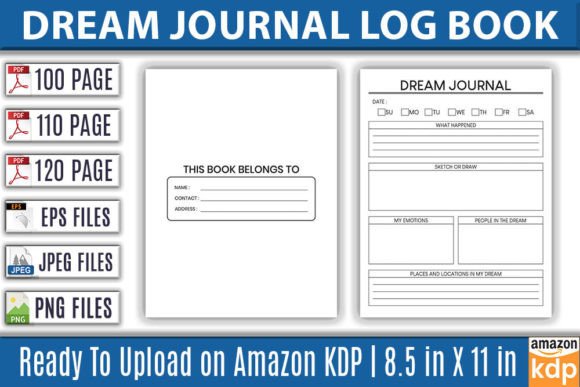
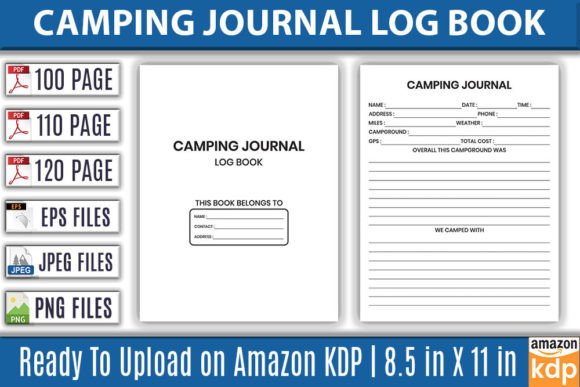
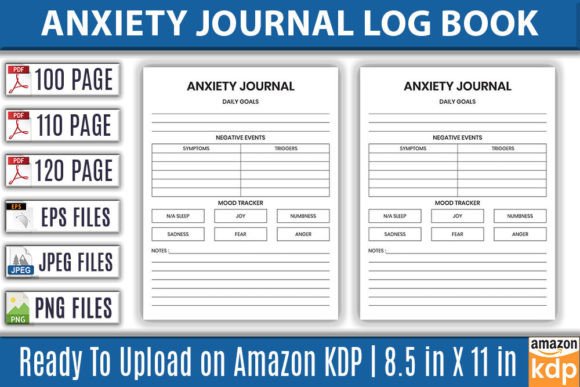
An Anxiety Journal Log Book KDP Interior is a digital template package designed explicitly for self-publishing. Think of it as the architectural plan for the inside of a book. A typical package, as indicated by common features, includes a set of professionally formatted pages—often offering options like 100, 110, or 120 pages—laid out in a standard trim size of 8.5×11 inches. The design prioritizes print quality with 300 DPI resolution and adheres to KDP's technical requirements, such as having no bleed for standard interior books. Crucially, these files are marketed as "KDP tested," meaning they have been uploaded to the platform to validate their compatibility and print quality, reducing technical hurdles for the publisher.
The package’s value lies in its completeness. It usually provides the final Print PDF file ready for instant upload, but also includes editable original files like EPS, transparent background PNGs for individual elements, and high-resolution JPGs. This multi-format approach offers flexibility: a user can upload the PDF immediately to start selling, or use the editable files to personalize the content, change prompts, adjust layouts, or incorporate their own branding before publication.
Key Distinctions and Core Features
The distinctiveness of an Anxiety Journal Log Book KDP Interior compared to a generic journal template or creating one from scratch revolves around specificity and convenience. It is purpose-built for anxiety tracking, often including structured prompts for logging moods, triggers, coping mechanisms, gratitude, and symptom patterns. Its design is optimized for a single, clear goal: facilitating reflective writing to manage anxiety.
- Page Count Flexibility: Options like 100, 110, or 120 pages allow publishers to choose a journal length that balances comprehensiveness with cost. A longer journal might offer more depth but will increase printing costs and potentially the retail price.
- Technical Precision: The 8.5×11 inch trim size and no bleed settings are deliberate choices for a standard, economical paperback interior on KDP. The 300 DPI guarantee ensures text and any subtle design elements appear sharp in the final printed product.
- File Suite for Different Needs: The inclusion of an editable EPS file is significant for those with graphic design software who wish to make substantial modifications. The PNG files with transparent backgrounds allow for easy extraction of design elements to use in marketing or other projects.
Comparing This Approach with Alternative Publishing Paths
When evaluating how to create an anxiety journal for KDP, several paths exist, each with different tradeoffs in time, cost, control, and quality.
Using a Pre-Made KDP Interior Template
This is the path represented by the Anxiety Journal Log Book KDP Interior package. Its primary strength is efficiency. It drastically reduces the time from idea to marketable product. The technical testing mitigates the risk of a failed upload or poor print quality. However, the tradeoff is in originality. While editable files offer some customization, the core structure and aesthetic are predefined. This might be perfect for a publisher who values speed and a proven format, but less ideal for someone wanting a highly unique, bespoke journal that breaks from conventional layouts.
Designing a Custom Interior from Scratch
Creating a completely original interior using software like Adobe InDesign or Canva offers maximum creative control. You can tailor every prompt, page flow, and graphic to a specific therapeutic approach or niche audience. The limitation is the immense investment of time and required design skill. Furthermore, you bear full responsibility for ensuring it meets KDP’s technical specifications (trim size, margins, DPI), which can be a steep learning curve with potential for costly errors if the print proof is unsatisfactory.
Using Generic Journal Templates or Software
Some services offer general journal templates or book-creation software. These can be adapted for an anxiety journal, but often lack the anxiety-specific prompts and structured logging sections. You might spend considerable time modifying a generic template to suit the purpose, which may not save much effort compared to a custom design. Their KDP compatibility might also be less assured than a package explicitly tested on the platform.
Evaluating the Best-Fit Situations and Limitations
The Anxiety Journal Log Book KDP Interior is likely the right choice in specific scenarios. It excels for first-time KDP publishers who understand the value of journaling but lack graphic design expertise or time. It is also a strong fit for professionals, such as therapists or coaches, who want to quickly create a complementary tool for their clients without diverting focus from their primary practice. The ready-to-upload PDF provides a fast route to market validation.
Its limitations become apparent when requirements deviate from its standard offering. If your vision involves an unusual trim size (like 6x9), incorporates complex illustrations, or requires a very specific therapeutic methodology not covered by standard anxiety logging prompts, this pre-made interior may be too restrictive. The “no bleed” setting also means it’s designed for interiors where images or color do not extend to the edge of the page; a journal requiring full-color, edge-to-edge artistic backgrounds would need a different template.
Decision Factors for Potential Publishers
Choosing to use an Anxiety Journal Log Book KDP Interior involves weighing several practical factors.
- Time vs. Customization: How quickly do you need the product live? If speed is paramount, the pre-made package wins. If creating a uniquely branded product is your top priority, consider the custom path.
- Technical Confidence: Are you comfortable navigating KDP’s formatting guidelines? The tested package offers a safety net. If you are technically adept, you might forego this convenience.
- Target Audience Depth: Does your intended audience need a simple, straightforward logging tool, or a journal deeply integrated with a particular cognitive-behavioral or mindfulness protocol? The pre-made interior typically caters to the broader, general audience.
- Budget for Design: While a pre-made interior has an upfront cost, designing from scratch has a hidden cost in hours spent. Evaluate which resource—money or time—you are more willing to invest.
When Another Option Might Be Necessary
You may need to explore alternatives if your project requires integration with other digital tools. For instance, if you envision a journal that references specific mobile apps or online community resources with QR codes or precise URLs, you’ll need the flexibility to add those elements seamlessly, which might be easier in a fully editable custom file. Similarly, if you plan to create a series of journals with a cohesive but evolving design, starting with a fully customizable foundation might be more strategic than adapting multiple pre-made interiors.
In essence, the Anxiety Journal Log Book KDP Interior represents a balanced middle path in the self-publishing landscape. It provides a robust, anxiety-specific foundation with verified technical integrity, lowering the barrier to entry for creating a helpful wellness product. By understanding its structured offerings, strengths in efficiency, and tradeoffs in originality, you can make an informed decision about whether it serves as the perfect blueprint for your project or if your vision demands a different approach entirely.